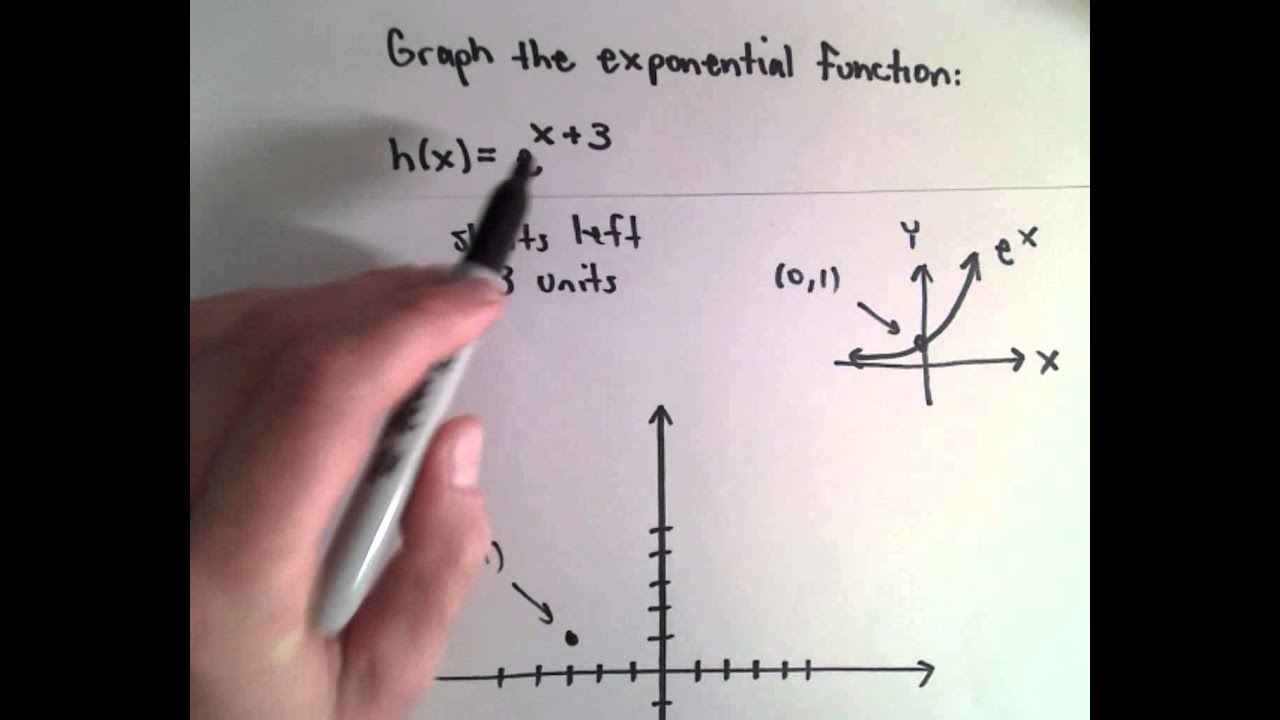
Graph Of Y E X 3 Using Graph Transformations Youtube
Graph transformation is the process by which an existing graph, or graphed equation, is modified to produce a variation of the proceeding graph It's a common type of problem in algebra, specifically the modification of algebraic equations Sometimes graphsSection 56 Graphical Transformations In this section we are going to explore the graphical repercussions of alterations to a given function formula Specifically, we are going to explore how the graph of the function \(g\) compares to the graph \(f\) where
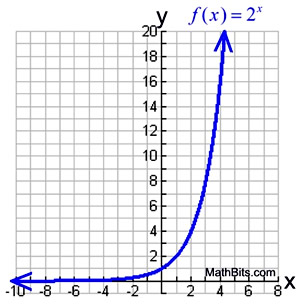
Y=e^x graph transformations
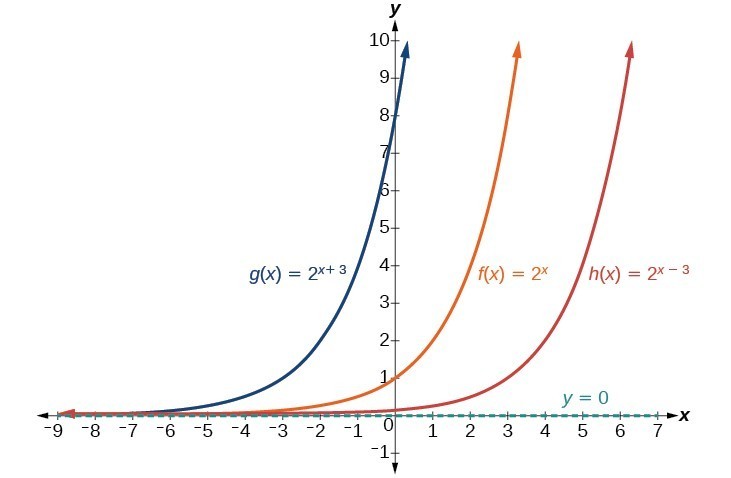
Y=e^x graph transformations-A) y = sin(4x) b) y = sin(5x) c) y = 4sin(x) d) y = 5sin(x) e) y = 4cos(x) f) y = cos(5x) 4) What is the right one?Transformations – shifting, stretching and reflecting Given the curve of a given function y = f ( x), they may require you to sketch transformations of the curve Transformations can shift, stretch and flip the curve of a function Don't confuse these with the shape transformations in coordinate geometry at GCSE ( transformations at GCSE )

Natural Exponential Graphs Iitutor
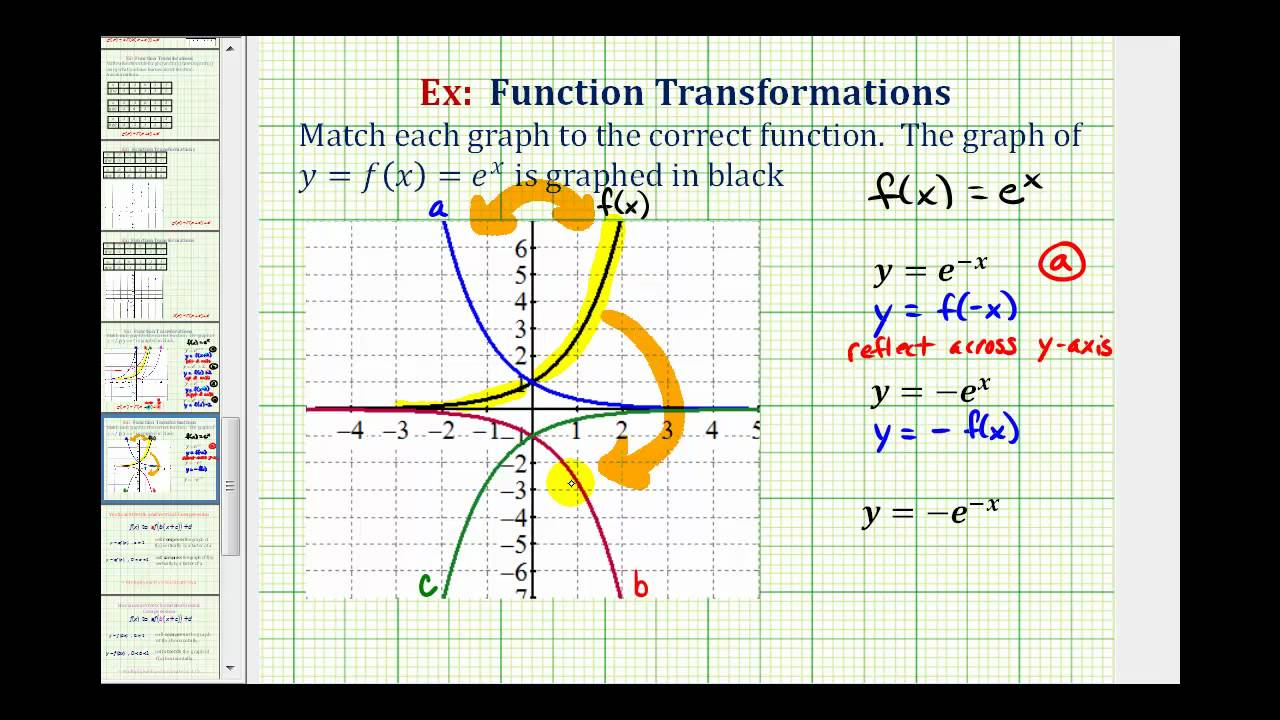
New How points in graph of f(x) visual e↵ect function become points of new graph f(x)d (a,b) 7!(a,bd) shift up by d the xaxis (There are three transformations that you have to perform in this problem shift left, stretch, and flip You have to do all three, but the order in which$1 per month helps!!VIDEO ANSWER So we want to take the graph of the equation y equals E V X and ordered a graft function Halfbacks equals two minus E to the negative X over two So we're gonna you to use the graph We have to think
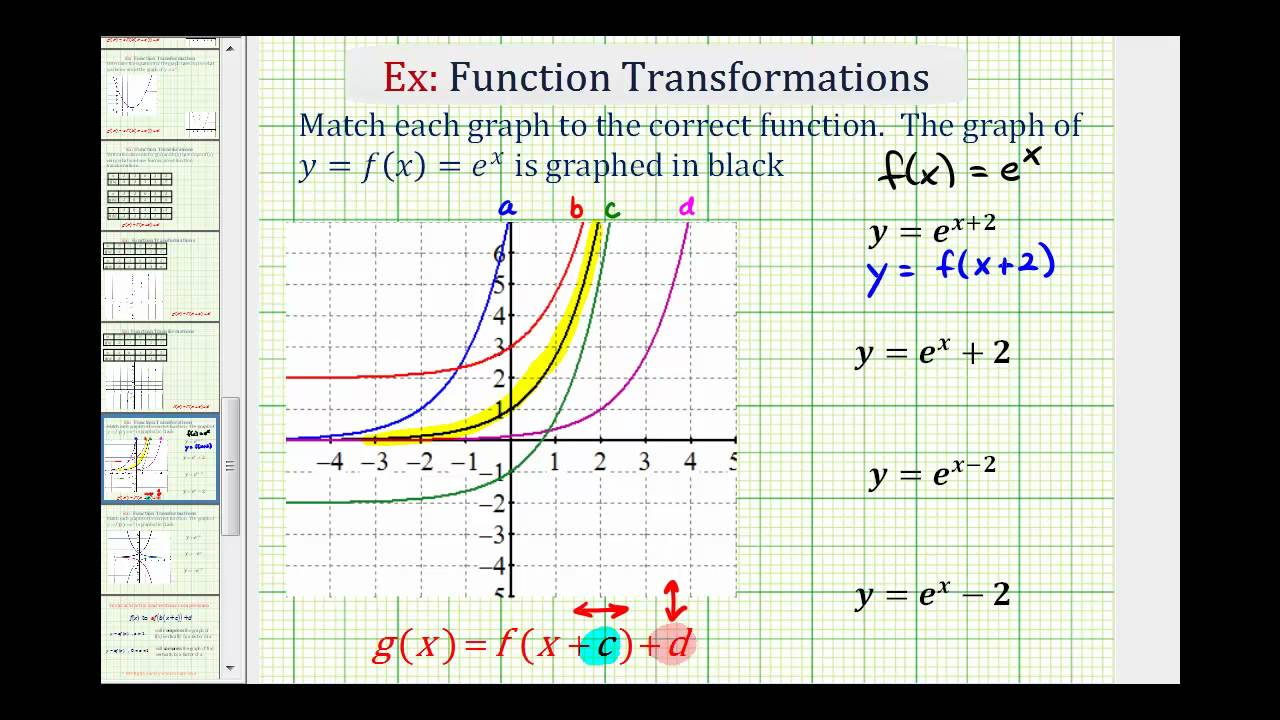
You can see this by following a point on the graph of y = e x through both of these transformations y = e x Point (1, e) (or pick any point you like) y = e 6x Point (1/6, e) Note that this point is 1/6 as far from the yaxis as (1, e) is IOW, the point (1, e) has been "compressed" toward the yaxis y = e 6(x 2)Solution for Use transformations on the graph of y = f(x) = to graph g(x) = 3 3 Use the graphing tool to graph the function g(x) Click to enlarge graphThe graph of y= Af B(xh) kis a transformation of the graph of y= f(x) The transformations can be done in the following order • A The function stretches or compresses vertically by a factor of A If A is negative, the function also reflects across the xaxis
Y=e^x graph transformationsのギャラリー
各画像をクリックすると、ダウンロードまたは拡大表示できます
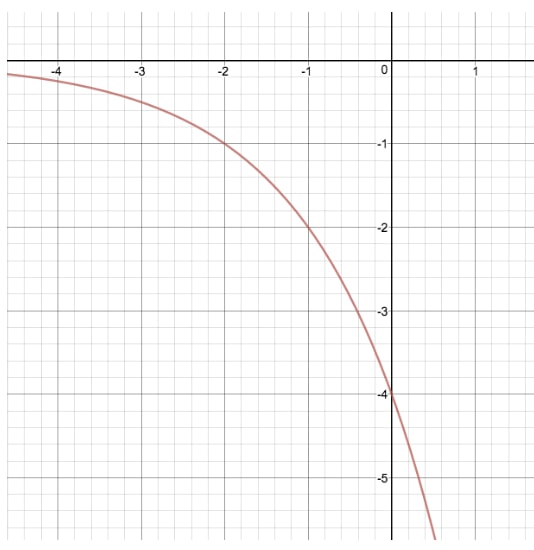 Transforming Exponential Functions |  Transforming Exponential Functions |  Transforming Exponential Functions |
 Transforming Exponential Functions |  Transforming Exponential Functions |  Transforming Exponential Functions |
 Transforming Exponential Functions | Transforming Exponential Functions |  Transforming Exponential Functions |
 Transforming Exponential Functions |  Transforming Exponential Functions | Transforming Exponential Functions |
 Transforming Exponential Functions | 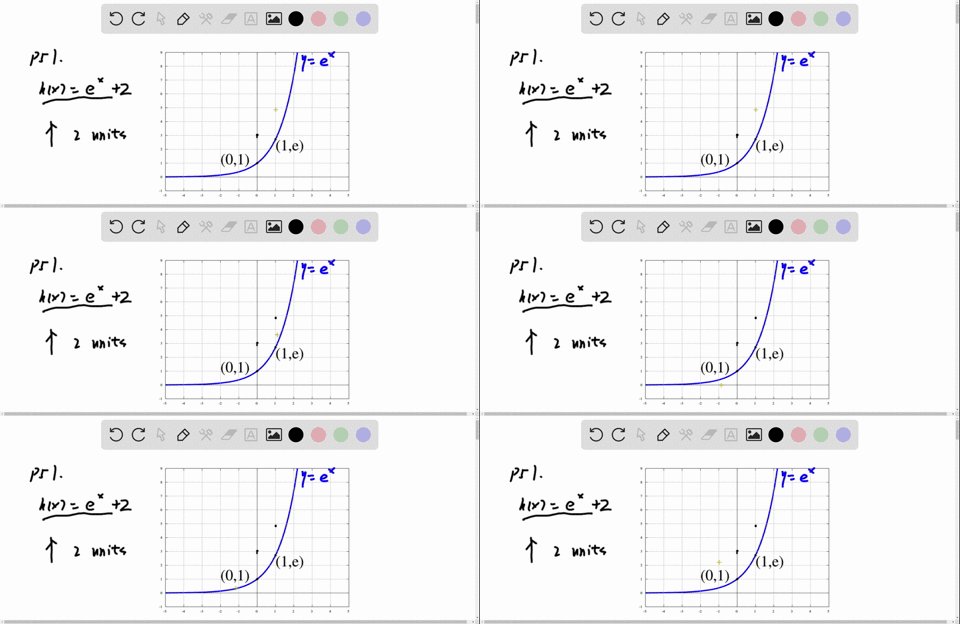 Transforming Exponential Functions | Transforming Exponential Functions |
Transforming Exponential Functions |  Transforming Exponential Functions |  Transforming Exponential Functions |
 Transforming Exponential Functions |  Transforming Exponential Functions |  Transforming Exponential Functions |
 Transforming Exponential Functions |  Transforming Exponential Functions | 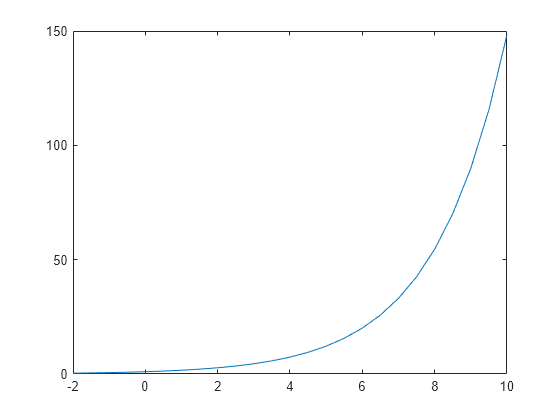 Transforming Exponential Functions |
 Transforming Exponential Functions |  Transforming Exponential Functions | 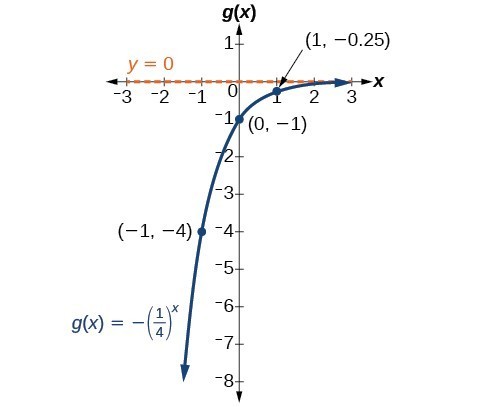 Transforming Exponential Functions |
 Transforming Exponential Functions | 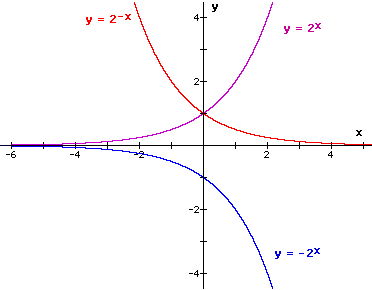 Transforming Exponential Functions | 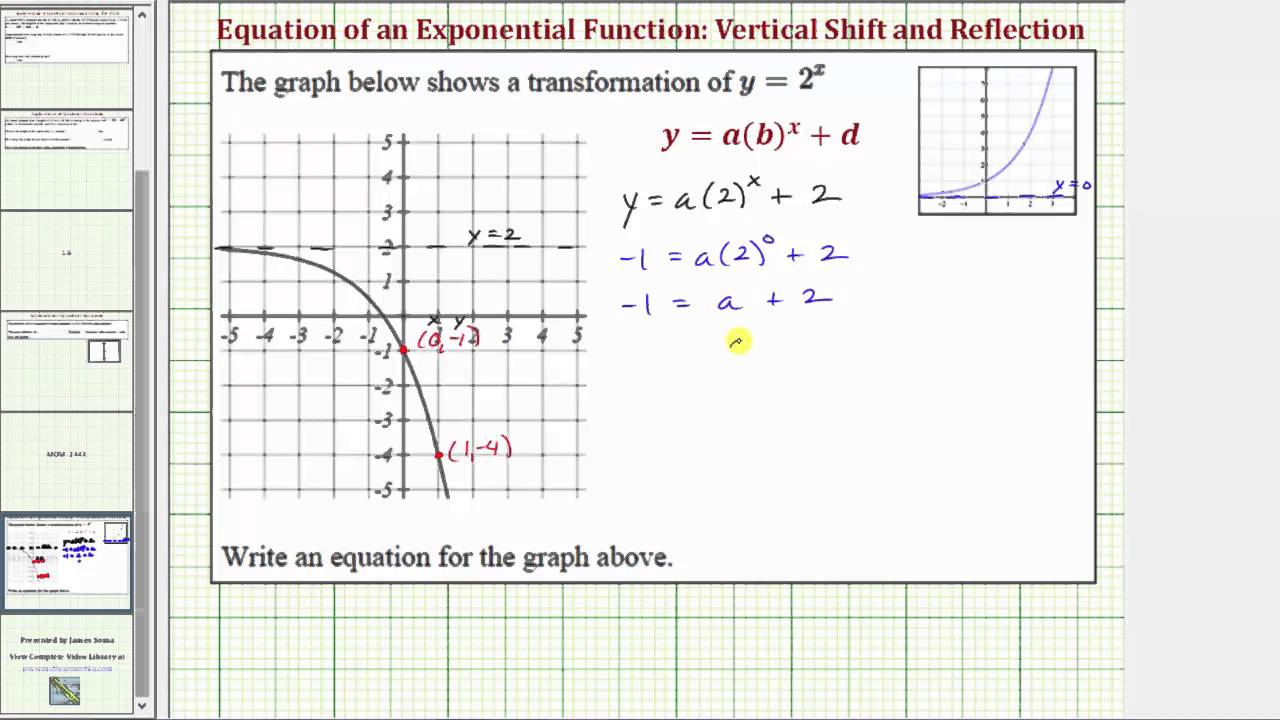 Transforming Exponential Functions |
 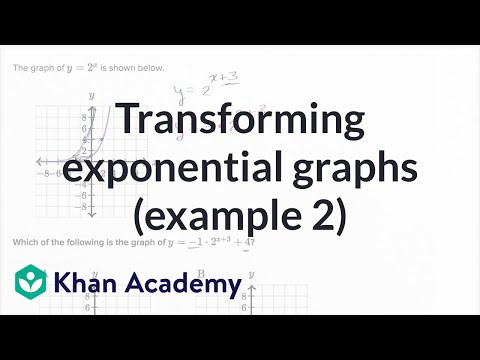 Transforming Exponential Functions | 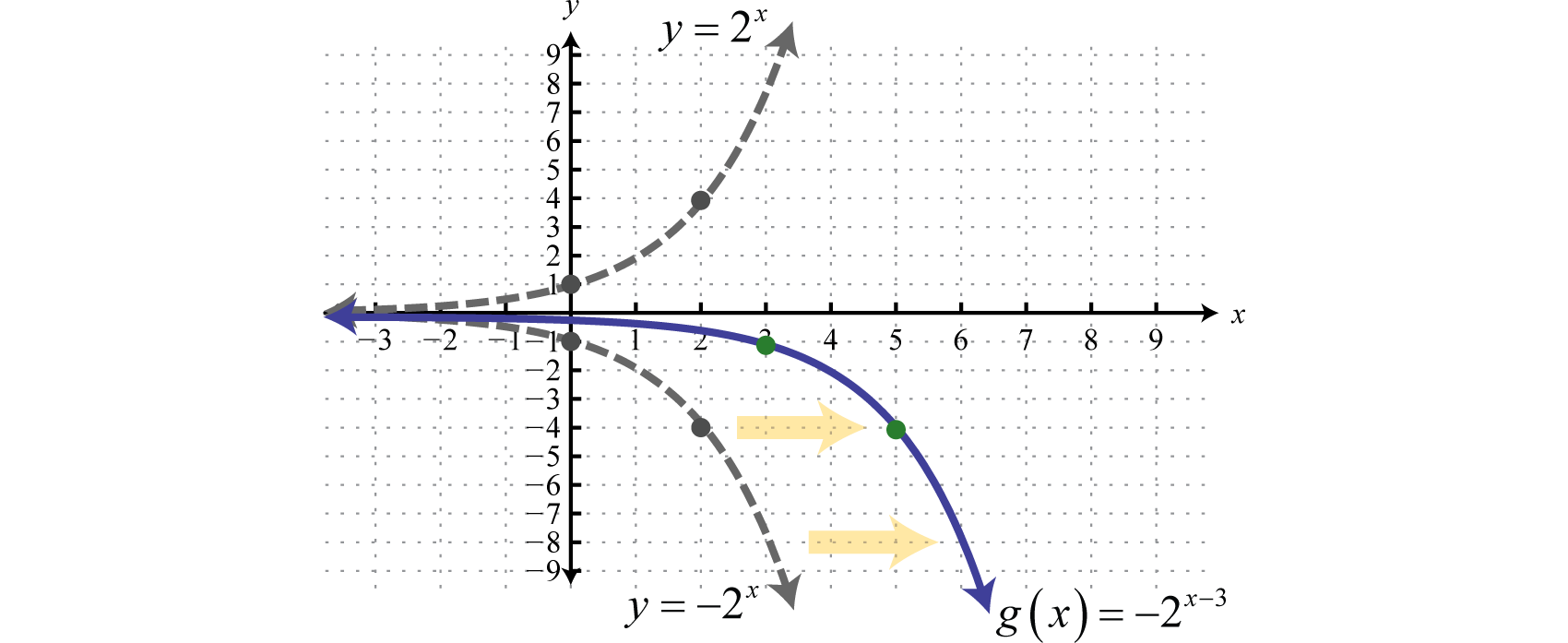 Transforming Exponential Functions |
 Transforming Exponential Functions | Transforming Exponential Functions | 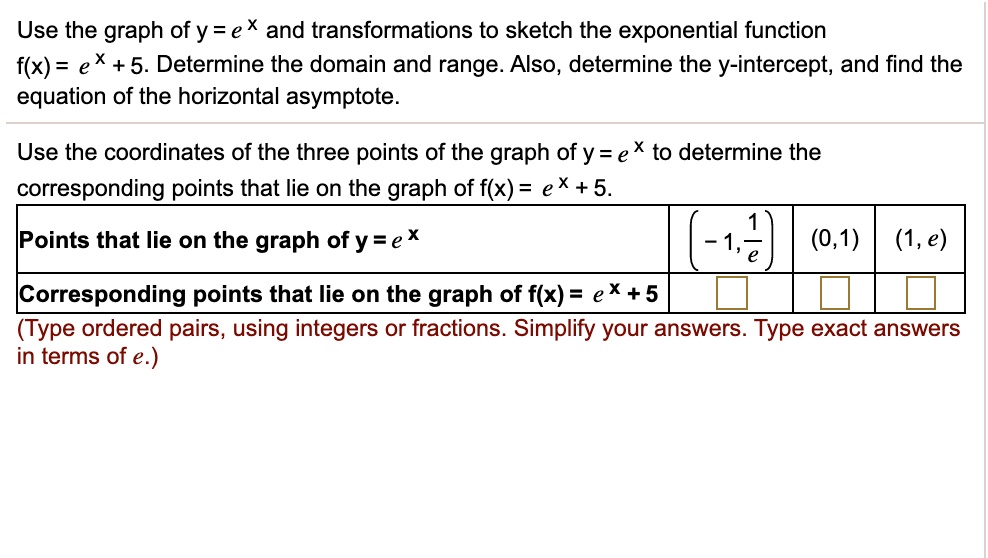 Transforming Exponential Functions |
 Transforming Exponential Functions | 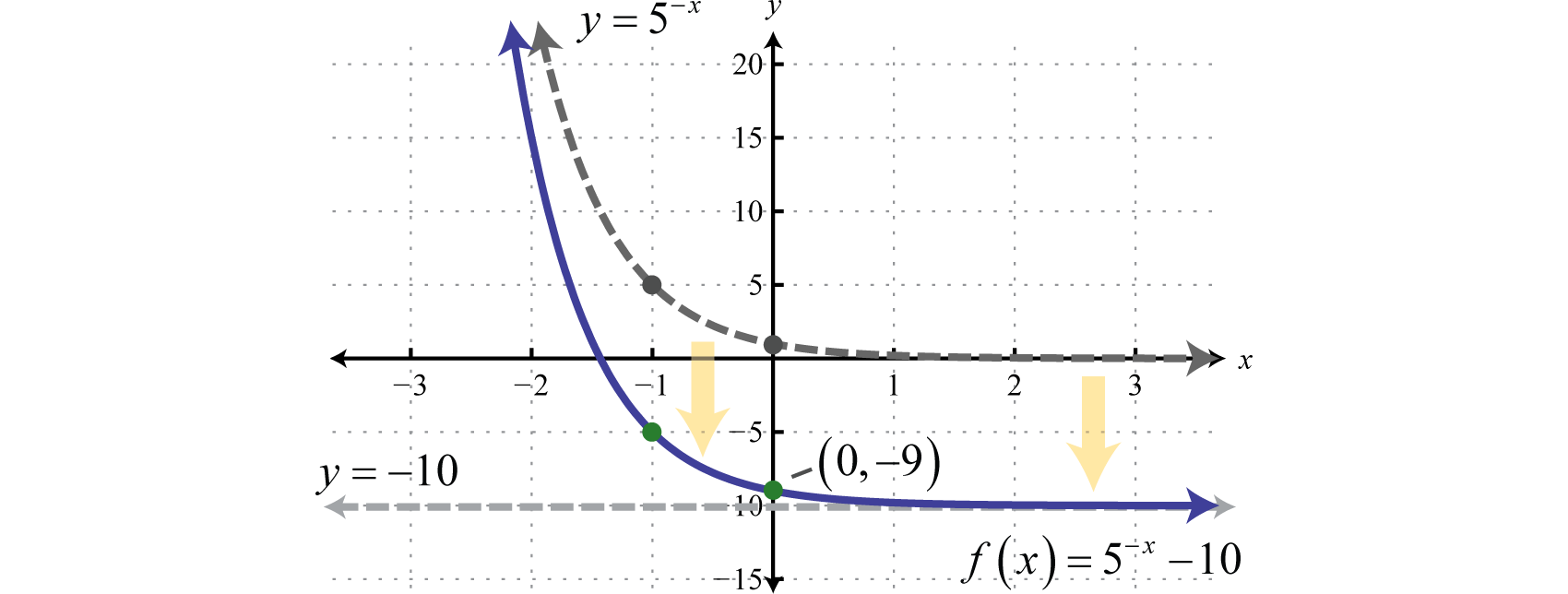 Transforming Exponential Functions |  Transforming Exponential Functions |
 Transforming Exponential Functions |  Transforming Exponential Functions |  Transforming Exponential Functions |
  Transforming Exponential Functions |  Transforming Exponential Functions |
 Transforming Exponential Functions |  Transforming Exponential Functions |  Transforming Exponential Functions |
 Transforming Exponential Functions | 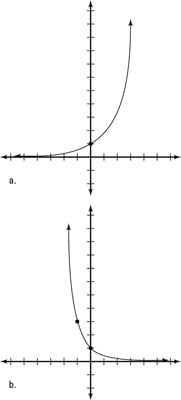 Transforming Exponential Functions | 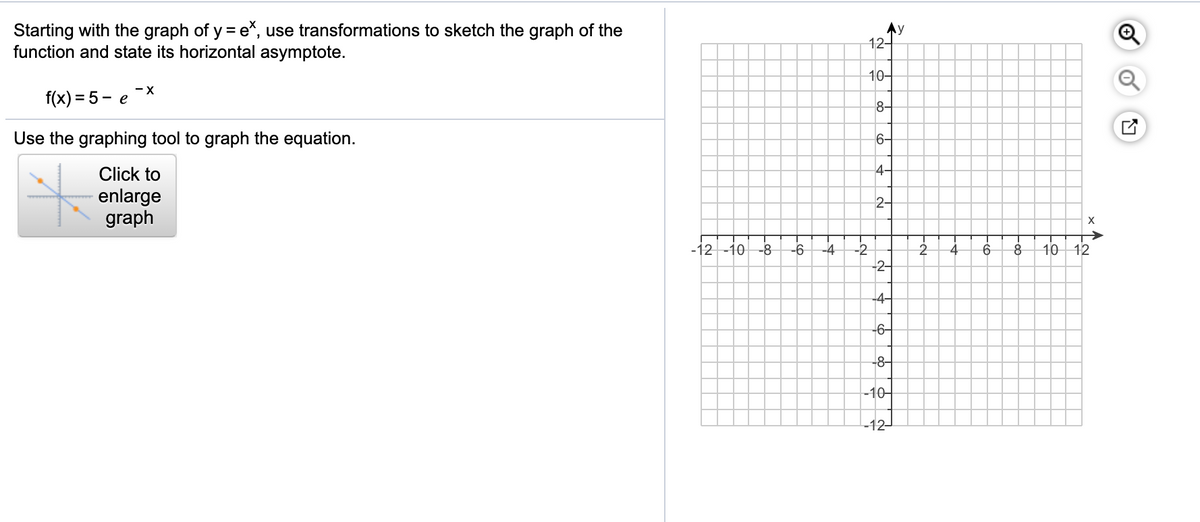 Transforming Exponential Functions |
 Transforming Exponential Functions | Transforming Exponential Functions | 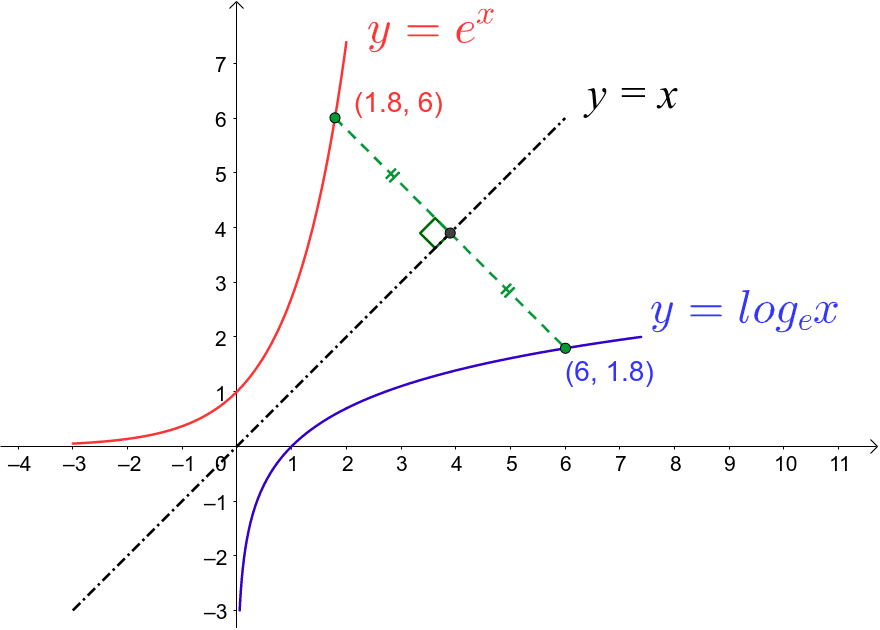 Transforming Exponential Functions |
 Transforming Exponential Functions |  Transforming Exponential Functions | 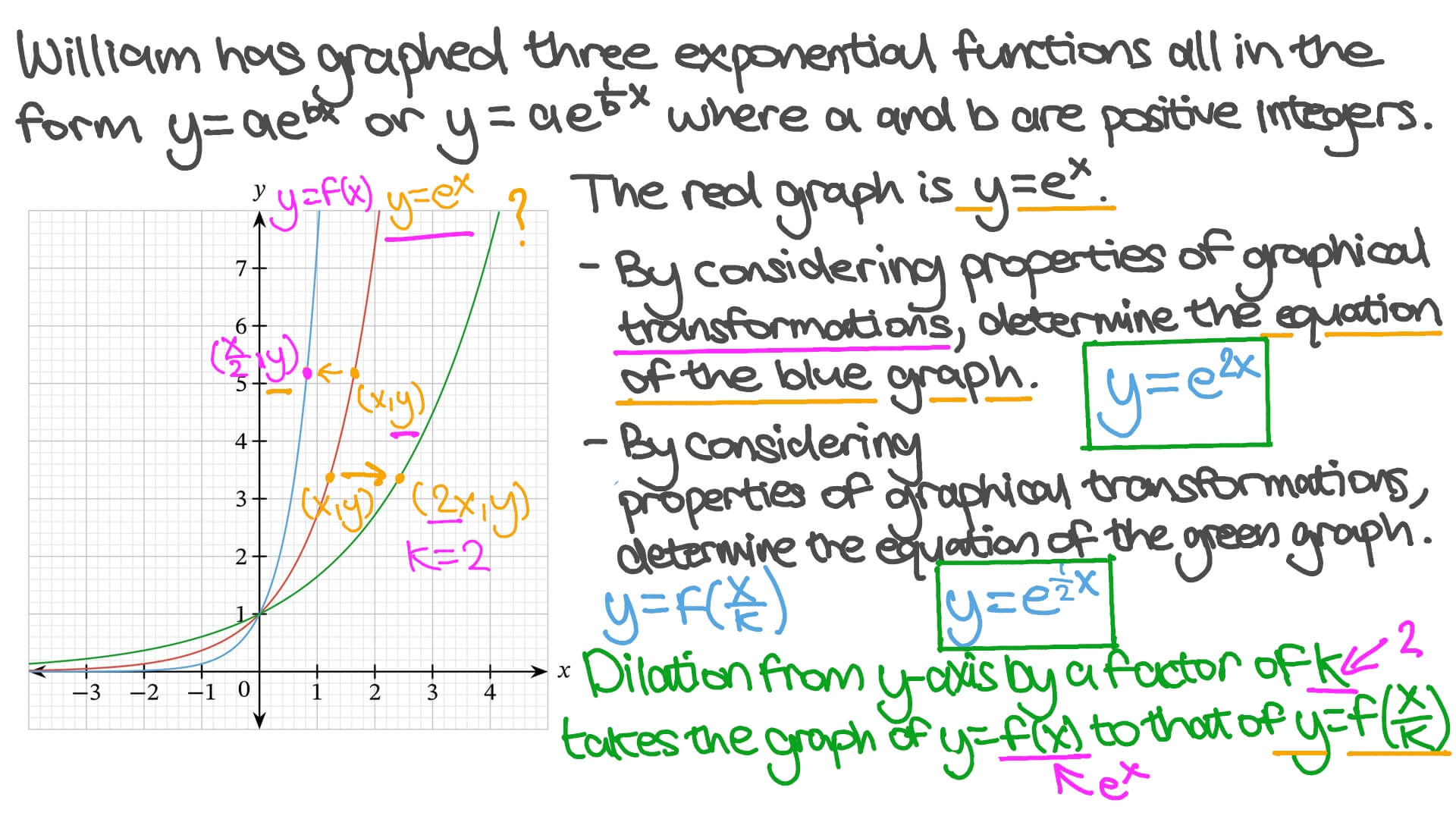 Transforming Exponential Functions |
 Transforming Exponential Functions |  Transforming Exponential Functions |  Transforming Exponential Functions |
 Transforming Exponential Functions | 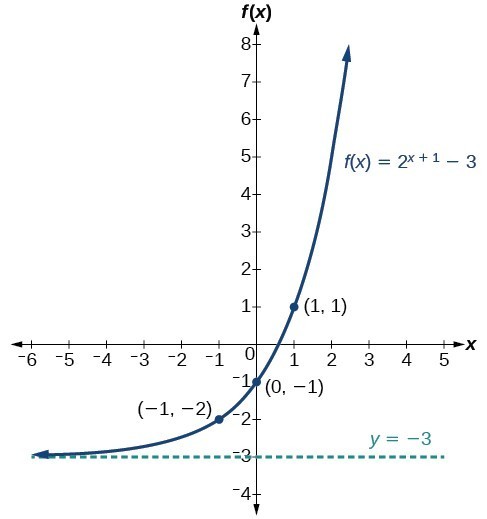 Transforming Exponential Functions | 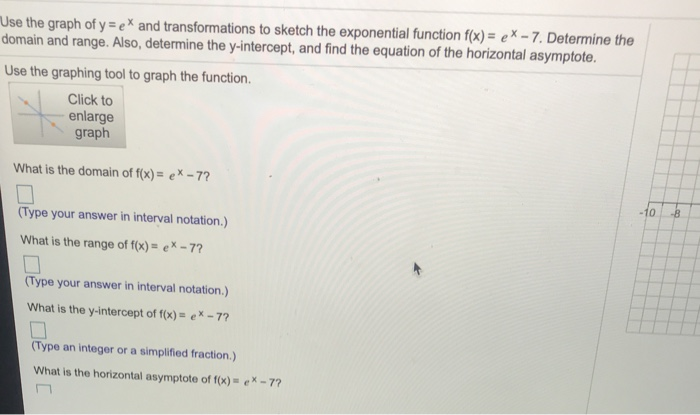 Transforming Exponential Functions |
 Transforming Exponential Functions |  Transforming Exponential Functions | 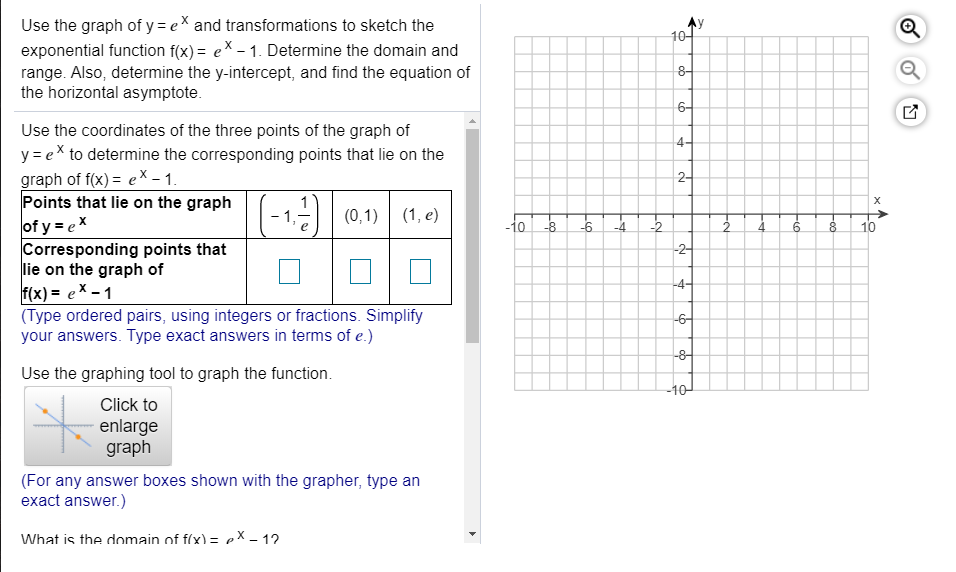 Transforming Exponential Functions |
 Transforming Exponential Functions |  Transforming Exponential Functions |  Transforming Exponential Functions |
 Transforming Exponential Functions |  Transforming Exponential Functions |  Transforming Exponential Functions |
 Transforming Exponential Functions |  Transforming Exponential Functions | Transforming Exponential Functions |
 Transforming Exponential Functions |  Transforming Exponential Functions |  Transforming Exponential Functions |
 Transforming Exponential Functions | 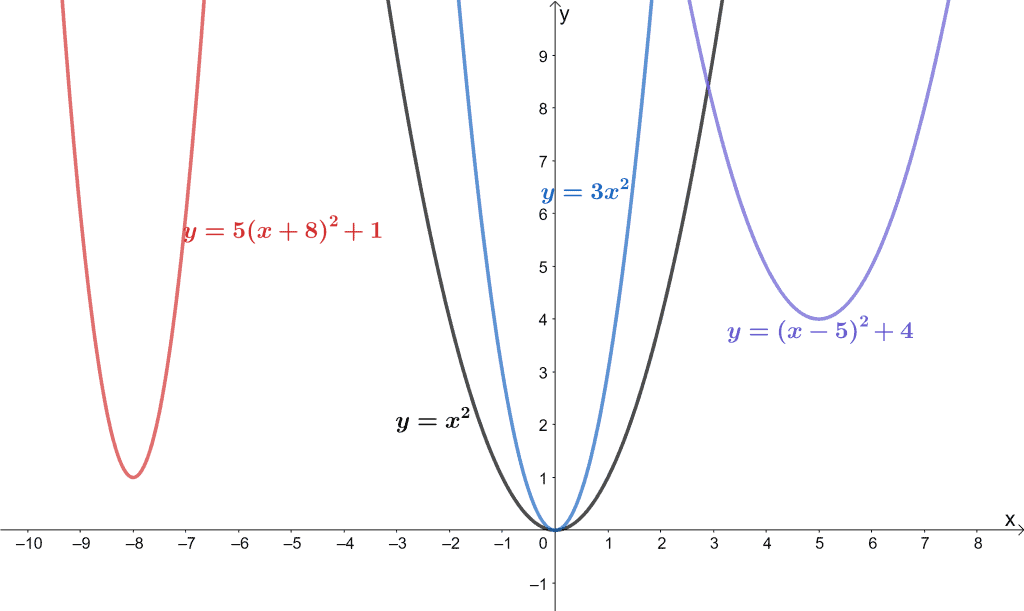 Transforming Exponential Functions |
 Transforming Exponential Functions |  Transforming Exponential Functions |  Transforming Exponential Functions |
 Transforming Exponential Functions |  Transforming Exponential Functions |  Transforming Exponential Functions |
 Transforming Exponential Functions |  Transforming Exponential Functions |  Transforming Exponential Functions |
 Transforming Exponential Functions |  Transforming Exponential Functions |  Transforming Exponential Functions |
 Transforming Exponential Functions | 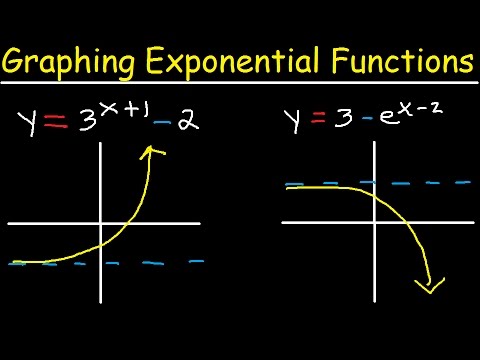 Transforming Exponential Functions |  Transforming Exponential Functions |
 Transforming Exponential Functions | 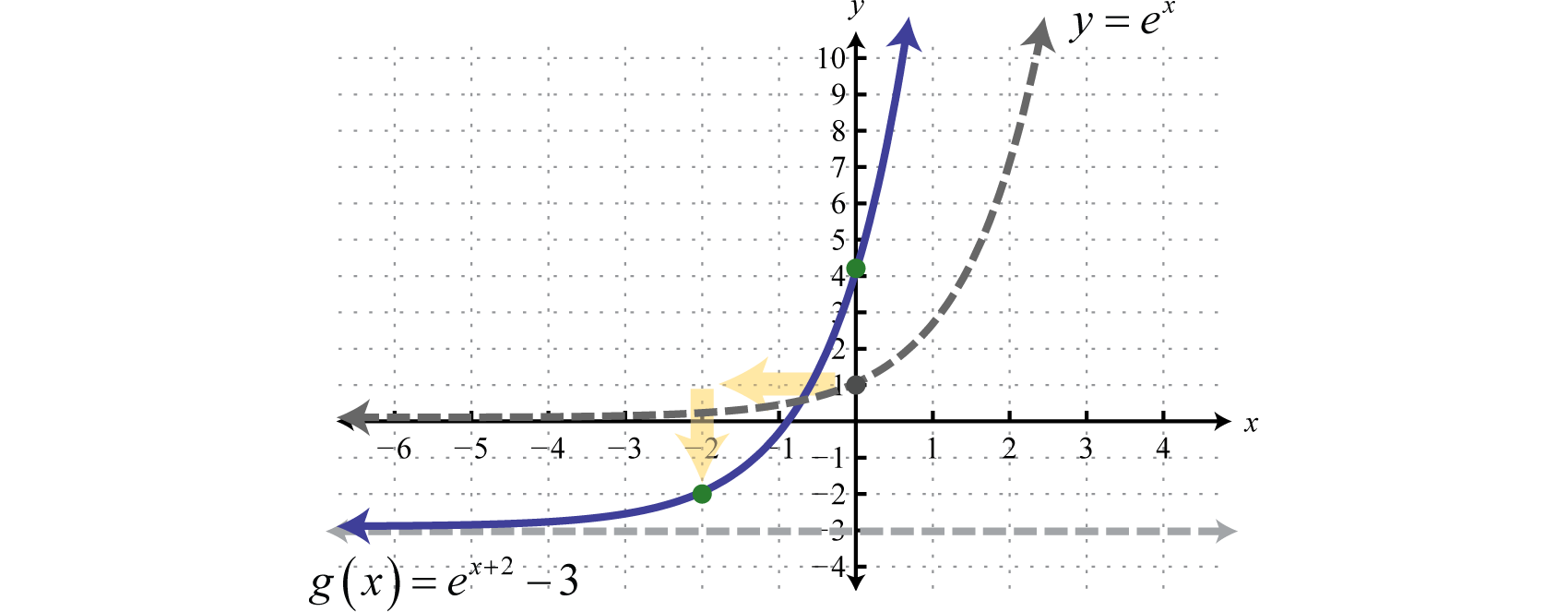 Transforming Exponential Functions |  Transforming Exponential Functions |
 Transforming Exponential Functions | Transforming Exponential Functions | Transforming Exponential Functions |
 Transforming Exponential Functions | 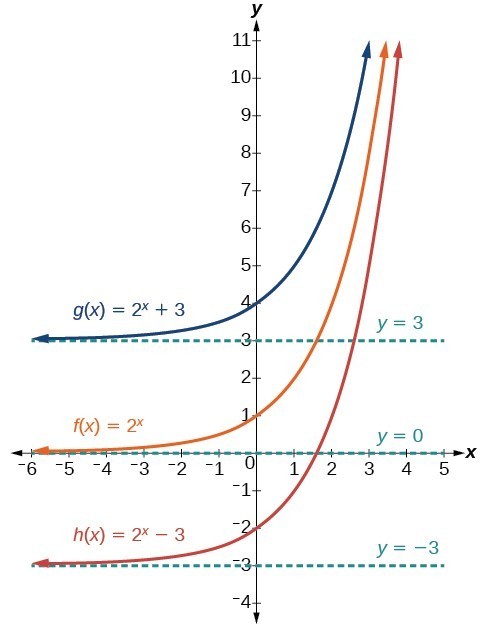 Transforming Exponential Functions |
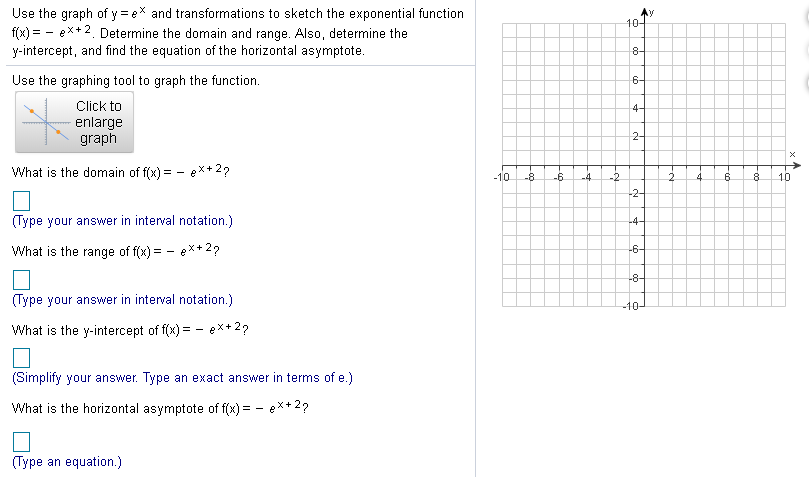
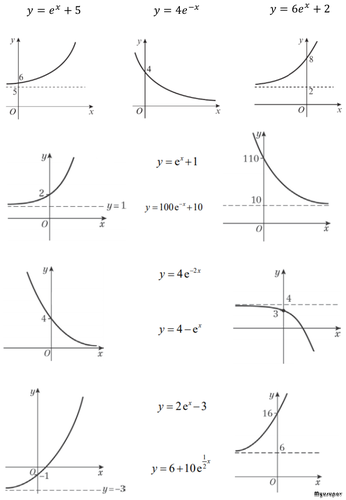
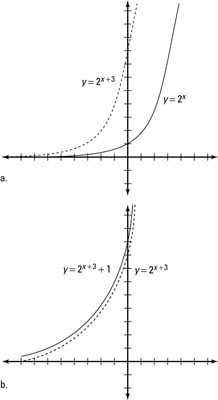
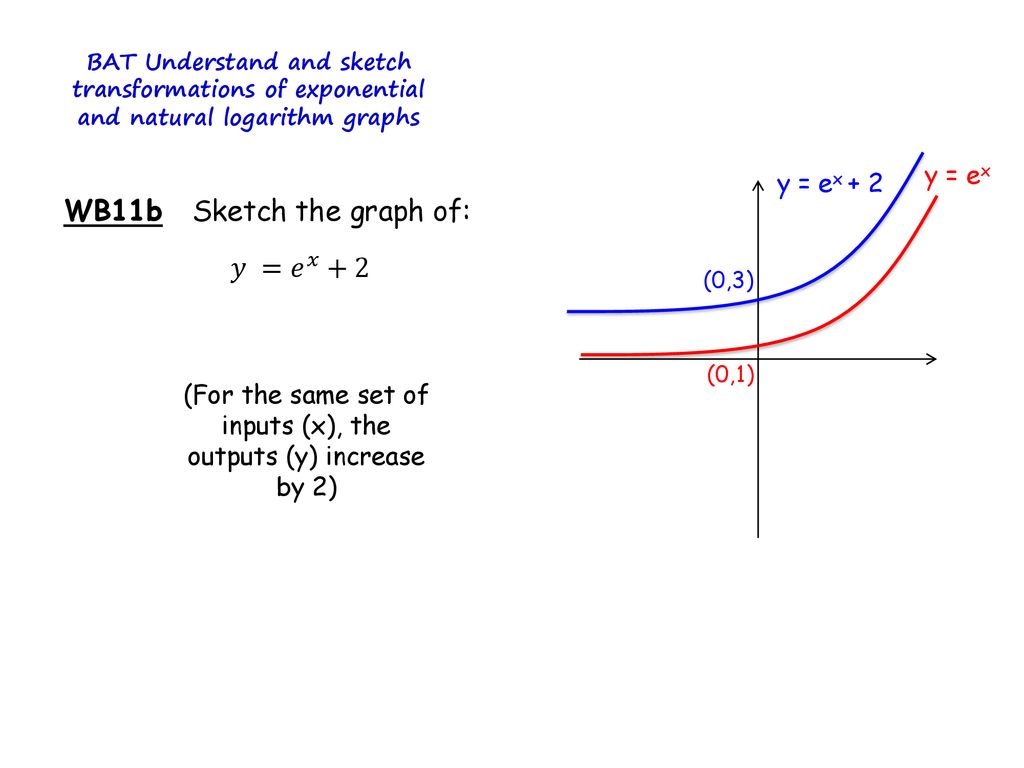
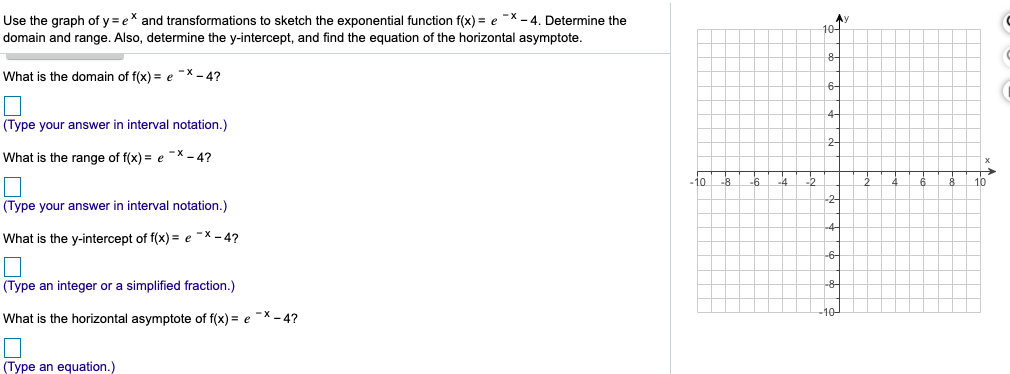
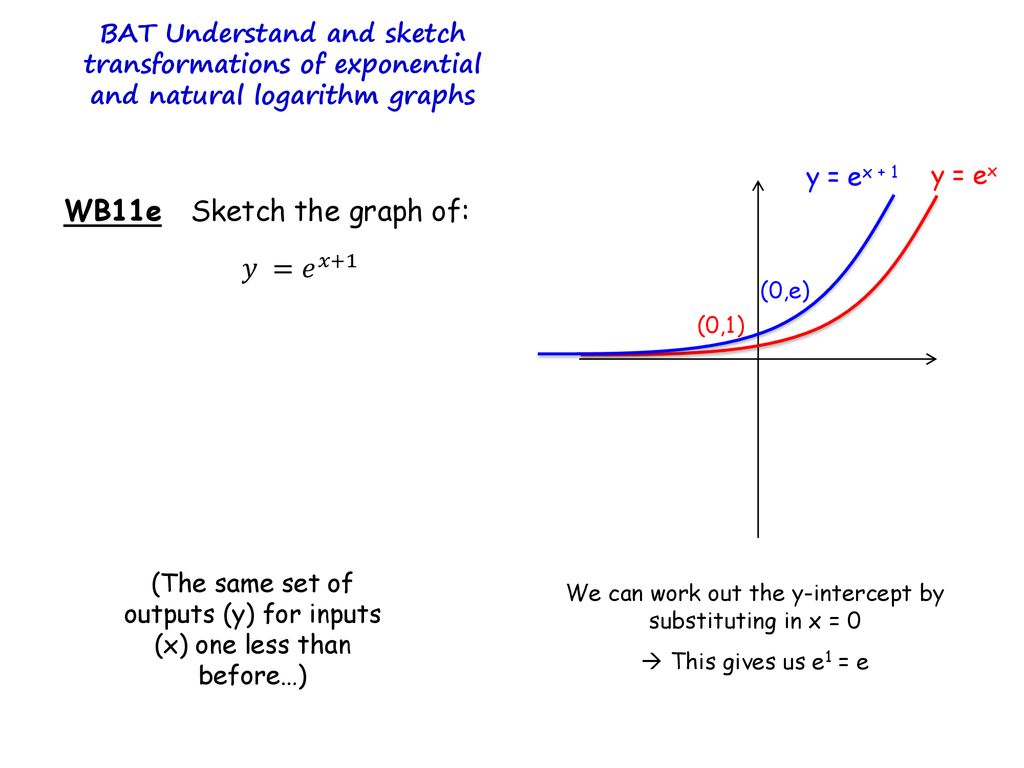
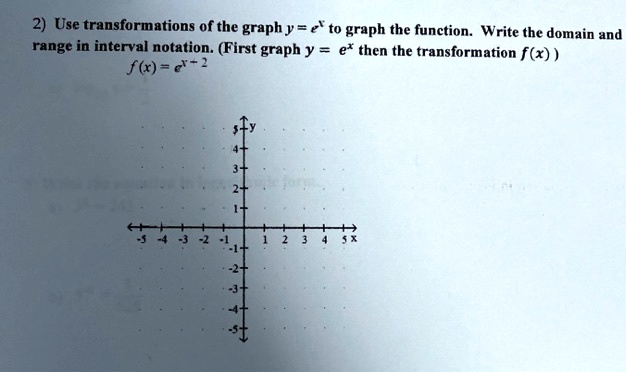
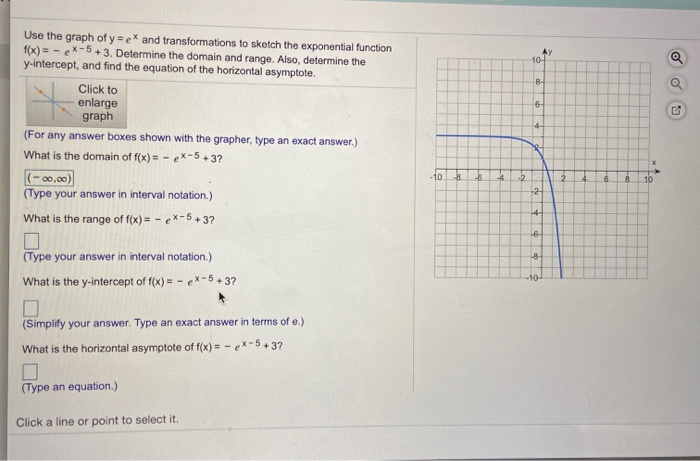
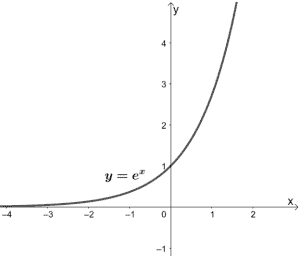
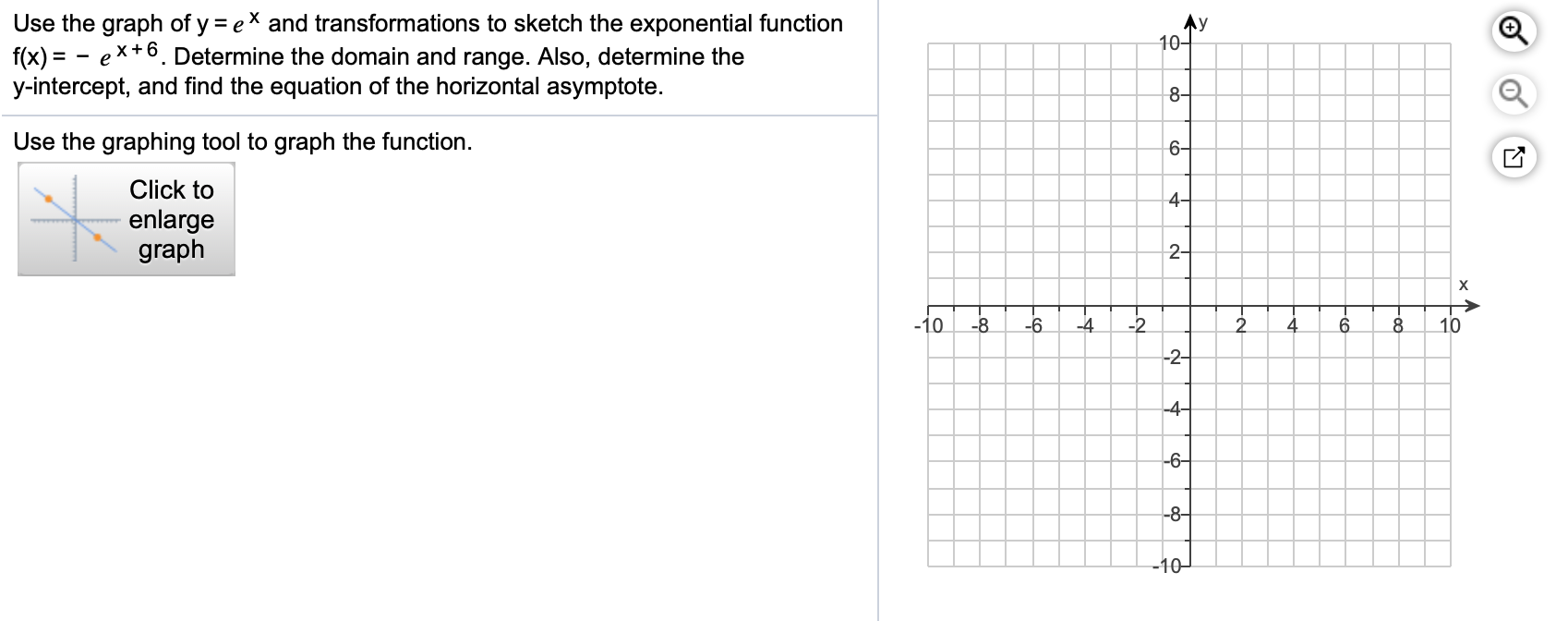
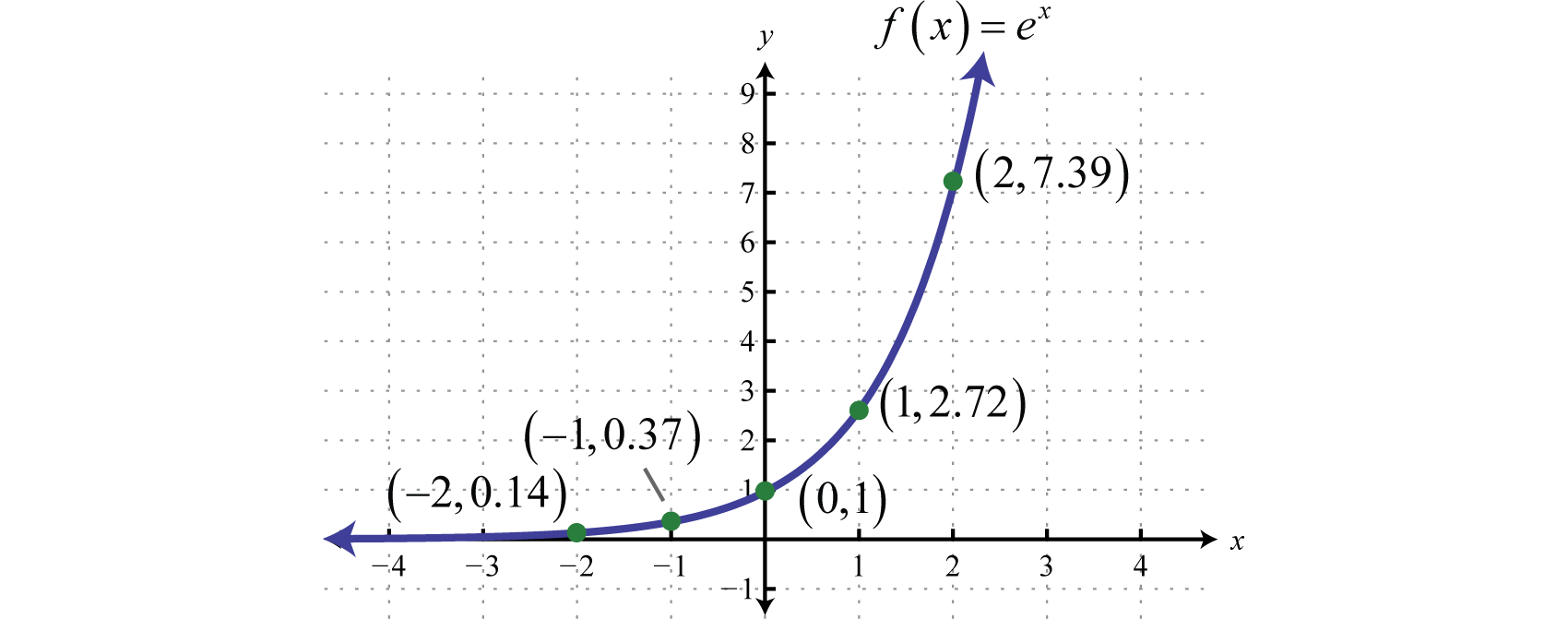
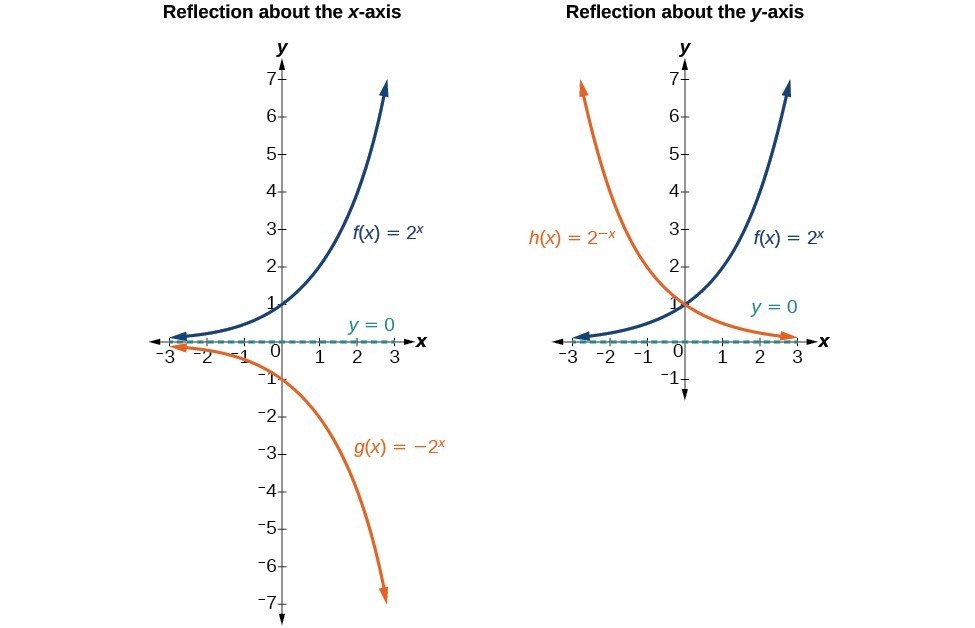
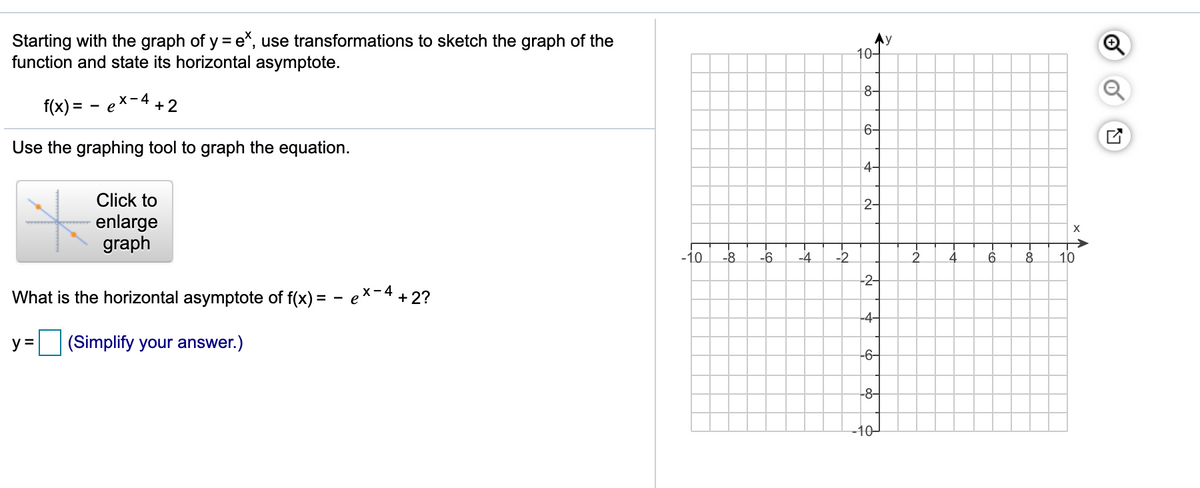
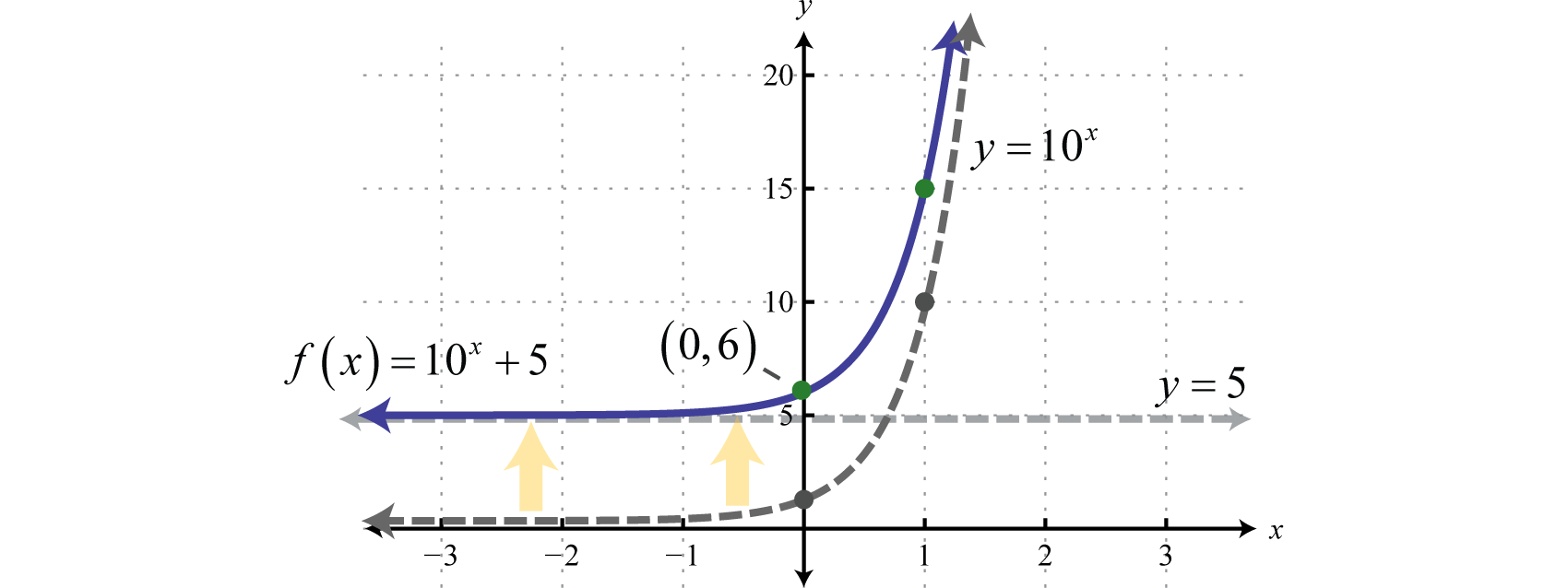
Describe the transformation of f (x) = e x represented by g(x) = e x 3 2 Then graph each function SOLUTION Notice that the function is of the form g(x) = e x − h k Rewrite the function to identify h and k g(x) = e x − (−3) 2 h k Because h = −3 and k = 2, the graph of g is a translation 3 units left and 2 units up of theUse the graph of y=e* and transformations to sketch the exponential function f (x) = ex2 Determine the domain and range Also, determine the yintercept, and find the equation of the horizontal asymptote Use the graphing tool to graph the function
Incoming Term: y=e^x graph transformations, y=x^3 graph transformations,


0 件のコメント:
コメントを投稿